
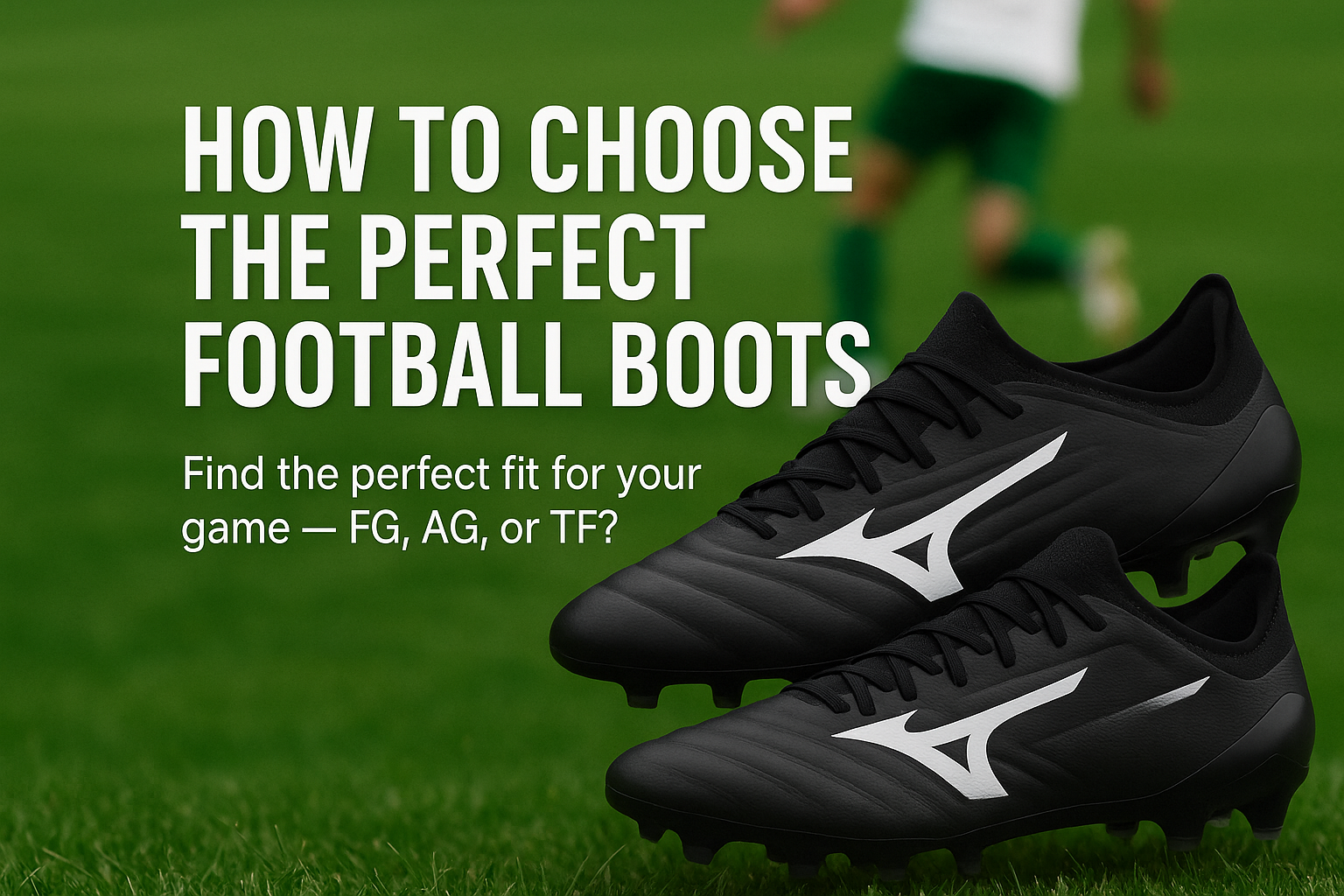
1. Understand the Playing Surface
Football boots are designed for specific playing surfaces. Choosing the wrong type can affect your grip, comfort, and longevity of the boots.
- FG (Firm Ground): Ideal for natural grass pitches that are dry or slightly damp. FG boots have molded studs for optimal grip.
- AG (Artificial Grass): Created for synthetic turf fields. AG boots have shorter, evenly distributed studs to prevent damage to the field and reduce strain on your feet.
- TF (Turf): Perfect for hard, flat surfaces like indoor turf. These boots have small rubber studs for added traction.
2. Choose the Right Fit
Comfort is key when it comes to football boots. An ill-fitting pair can lead to blisters, discomfort, or even injuries. Consider the following:
- Foot Shape: Some brands cater to wider feet (e.g., Mizuno), while others are better suited for narrow feet (e.g., Nike).
- Material: Leather boots (like kangaroo leather) mold to your feet over time, offering superior comfort. Synthetic materials are lightweight and water-resistant but may not stretch as much.
3. Prioritize Your Playing Style
Your position and playing style also influence the type of boots you need:
- For Attackers: Look for boots with a clean strike zone and enhanced agility features.
- For Defenders: Opt for durable boots with extra protection.
- For Speed: Lightweight designs with a snug fit are ideal.
4. Test Before You Buy
If possible, try the boots on before purchasing. Walk, jog, and simulate movements to ensure they feel comfortable and secure.